
The Face of a Stereotype
Why the ‘Jewish nose’ needs to go under the knife.
By Molly Seghi

Original artwork by Brooke Cohen-Pinsky
I asked DeepAI to generate an image of a Jew. Each time I hit ‘submit,’ it would produce some variation of a bearded man with a prominent nose, deep-set wrinkles and tired eyes to match. Donning a black-rimmed hat and a suit, with what appears to be a tallit, he stands before a crowd.

An image generated by DeepAI on November 6, 2025, using the prompt: “Jew based on media stereotypes.” (Molly Seghi/DeepAI)
For the record, I asked ChatGPT first. We tussled when the robot wouldn’t fulfill my request, even after I affirmed I would use the creation for educational purposes. Although it claimed it would not “show or reproduce antisemitic imagery directly,” the chatbot did confirm my suspicions: the most common Jewish physical trait reflected in the media is a hooked nose. Most of my formative years were spent grappling with what constitutes a “Jewish” nose. While I don’t possess the frizzy curls and fair skin that my Eastern European ancestors may have, was my striking nose really a telling sign of my origins?
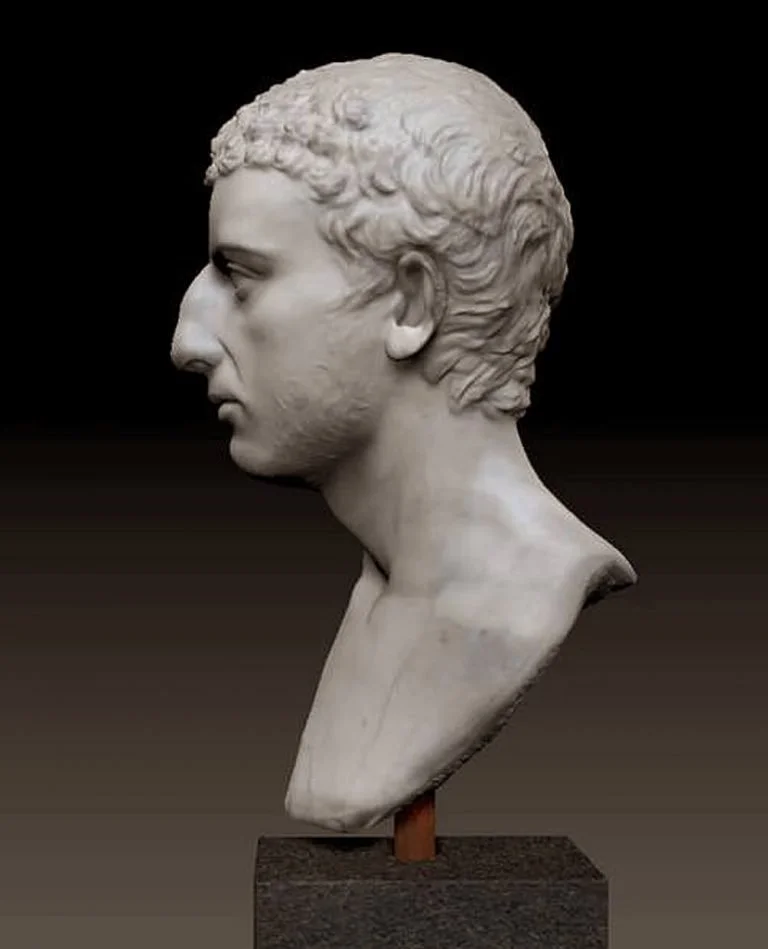
A Roman bust once misidentified in the early 20th century as the Roman-Jewish historian and military leader Flavius Josephus — an attribution based largely on stereotypes about the “Jewish nose.” Modern scholarship rejects that identification. The image was scanned from an 1888 copy of Josephus’ The Jewish War. (Ny Carlsberg Glyptotek/Wikimedia Commons)
The Jewish nose falls into the category of stereotypes that assign an exaggerated quality with pejorative intention. There is no evidence of Jews portrayed with larger noses before the 12th century, according to historian Sara Lipton. Only later did these features become associated with Jews, she said. The "Jewish nose" was portrayed with various shapes until the 13th century, when it mutated into the hooked form on the face of a bearded Jewish caricature. Ever since, the nose has remained a recognizable attribute of Jewish ethnicity, appearing in portraiture, physiognomical literature, medical writing and other media.
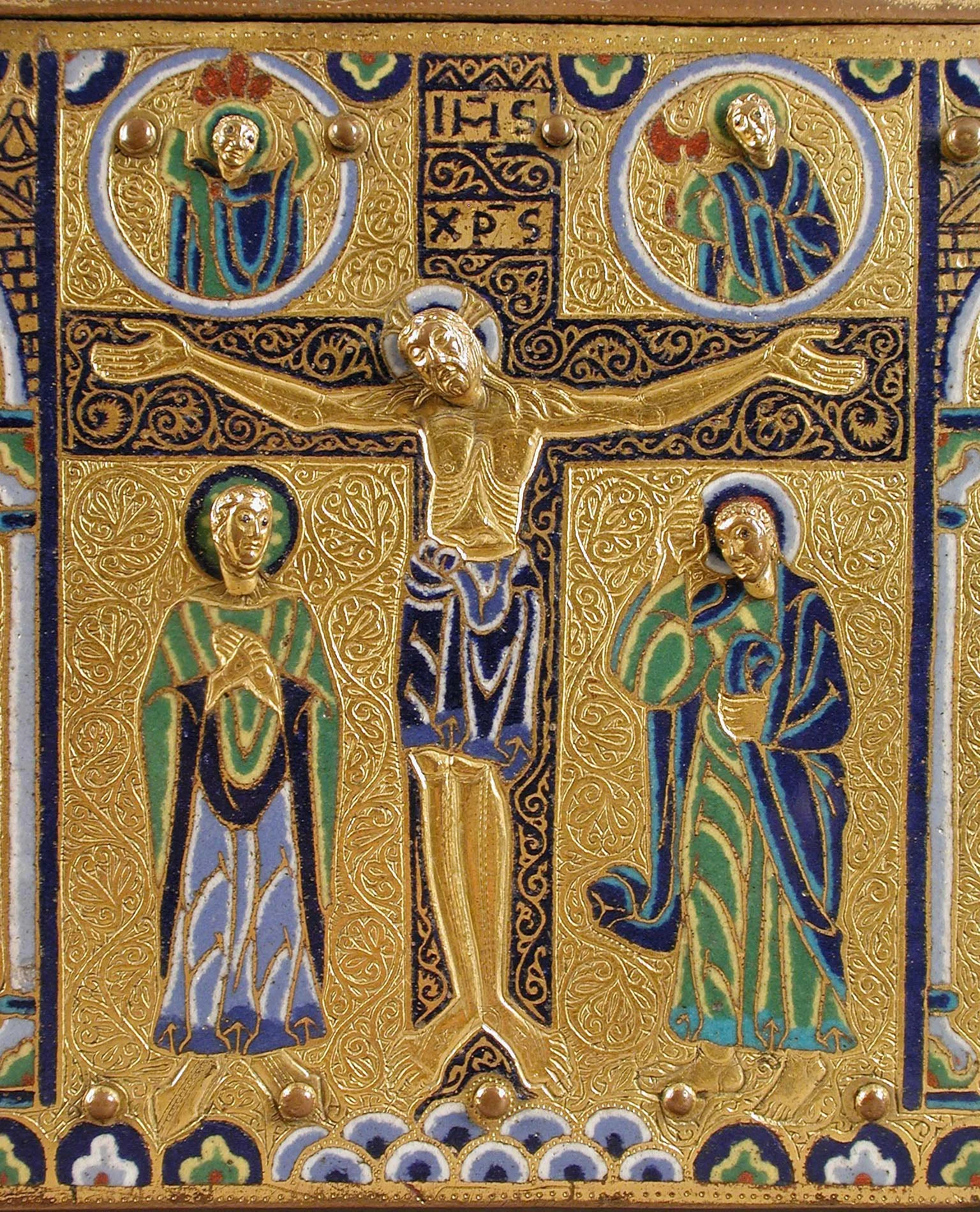
Enamel reliquary casket depicting Jesus nailed to the cross under the direction of Jewish and Gentile executioners, with one of the first visual representations of Jews shown with hooked noses, circa 1170, (country of origin uncertain). (Réunion des Musées Nationaux/Art Resource, New York)
According to the American Jewish Committee, the reference to a hooked Jewish nose is still used today, and it perpetuates the antisemitic notion that negative personal qualities are physically manifested. It suggests that an ‘ugly’ feature mirrors an ‘ugly’ soul.
The nose typecasts Jewish people with other undesirables bearing distinct attributes, like warty witches and beady-eyed rats, and is part of a long lineage of physical traits that have been vilified to ground hate against other minorities, like Black skin or Asian eyes. The familiar illustrations of a hooked-nose Jew would typically accompany the worst calumnies aimed at defaming Jews, such as the false and malicious claim of blood libels.

Antisemitic propaganda in Nazi Germany depicting capitalist and communist “vermin” in Der StürmerSeptember 1944, a Nazi propaganda newspaper. The translated caption reads: “Vermin. Life is not worth living when one does not resist the parasite, never satisfied as it creeps about. We must and will win.” (Reddit)
So, is there something inherently biological that makes a certain nose “ethnic”? While it is true that certain genetic traits are an evolutionary adaptation, the “Jewish nose” is not one of them. Given that Jews reside on all corners of the globe, those from different regions historically have different kinds of noses, specifically adapted to the climate in which they inhabit. And while Jewish genes are a category among other ethnicities that can be traced using DNA, Jewishness is not only determined by blood but also by religious practice and cultural ritual. In other words, a physical feature does not represent Jewishness and can’t automatically be identified as Jewish because a Jew possesses it.
Historically, viewers have assigned meaning to the physical feature, usually within a negative context. By reclaiming ownership of the meaning attributed to that feature, the one who wears it invalidates the derogatory sense of it. As historian and medical ethics professor Sharonna Pearl puts it, believing in the “Jewish nose” myth means “accepting a narrative that is not our own [and] affirming a belief system that situates Jewishness in the body and blood.”
The issue of what constitutes Jewish identity is something that has been of particular interest to me, as my paternal grandfather converted to Judaism long before I was born. That fact rarely came up until one summer day in 2024.
Perched on a wooden barstool behind the clutter-filled front desk of a local lake, I caught a glimpse of a red lifeguard shirt approaching me from behind.
“You know, I never noticed your nose until now,” my coworker observed. “It looks very Jewish.”
Startled, I took a breath and gave her a strained smile.
“My nose happens to be a gift from my grandfather,” I told her. “It's a replica of his.” I then shared that my grandfather was born into an Italian-Catholic family, similar to hers, and that he converted to Judaism.
This brief interaction opened the floodgates to my past recurring ruminations as I overanalyzed my nose based on the perceptions of others. The children who crudely dubbed me “Pinocchio” made me aware that my nose was long. Other comments made me consider its size. But the mere mention of my nose was the worst of all, as it made me realize that my nose was somewhat unusual, something people noticed.
Through some research, I learned that my nose more closely resembles what was historically described as a Roman nose, with a high and remarkable bridge, a downward-curved profile and a well-defined pointed tip. In ancient Rome, this shape was associated with authority and status, with its symbolic and literal prominence represented in sculptures and portraiture.
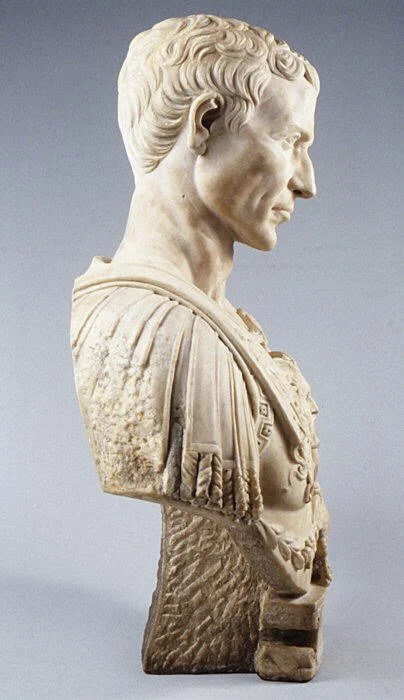
Bust of Julius Caesar by Andrea di Pietro di Marco Ferrucci, created circa 1512–14, showing a Roman nose. Metropolitan Museum of Art, New York. (Metropolitan Museum of Art)
The largeness of the Roman nose, although similar in form to the “Jewish nose,” was prized. The main differences between the two are their labels, the people wearing those noses and whether the nose is considered a positive trait or a negative one, based on ethnicity. Labels and lineage aside, learning to live with mine in the mirror each day has been a process.
When I was younger, my dad would routinely trace his fingers along the tip of my nose and declare, “Your nose is a perfect Italian ski slope.” Yet, despite his flattery and affirmation, I often wished to solve what I perceived as my lengthy problem. I spent hours staring at my nose in the mirror. I flirted with the idea of a “fixed” nose, new face and improved self-esteem for the small price of $10,000.
Although part of me felt guilty and repulsed at the thought of showing a plastic surgeon a reference image of a Hollywood movie star, I wouldn’t have been the first, or the last, Jewish person to sit in that chair. I could imagine that an actress herself, with a more famous and expensive surgeon, probably sat in a similar chair at some point in her career.
Historically, according to Unpacked Media, nose-consciousness permeated European Jewish communities by the late 1800s, with rhinoplasty patients hoping to pass as non-Jewish. In the 1890s, cosmetic surgery was embraced as the first modern nose job was performed, according to the Jewish Museum. By the 20th century, physicians termed physical deformities requiring surgery as a “Jewish nose,” arguing that fixing such “racial characteristics” could result in improved well-being, a finding presented by Beth Preminger in her article titled “The “Jewish Nose” and Plastic Surgery: Origins and Implications.”
The number of Orthodox women undergoing the procedure has been on the rise, according to Dr. Ira Savetsky, a celebrity plastic surgeon. Many young women opt for it before they begin dating in hopes it will improve their prospects, he said.
According to the American Society of Plastic Surgery, although more surgeries are performed for aesthetic purposes, those focused on maintaining cultural characteristics – known as ethnic rhinoplasty – are also increasing annually.
Flaunting an ethnic nose, however, doesn’t always mean going under the knife. Barbra Streisand, for example, was a trailblazer in embracing natural beauty, unabashed in refusing cosmetic change. Her choice did not erase the construct, but it complicated it, showing that a nose can be a mark of beauty or a trademark, depending on who’s looking.
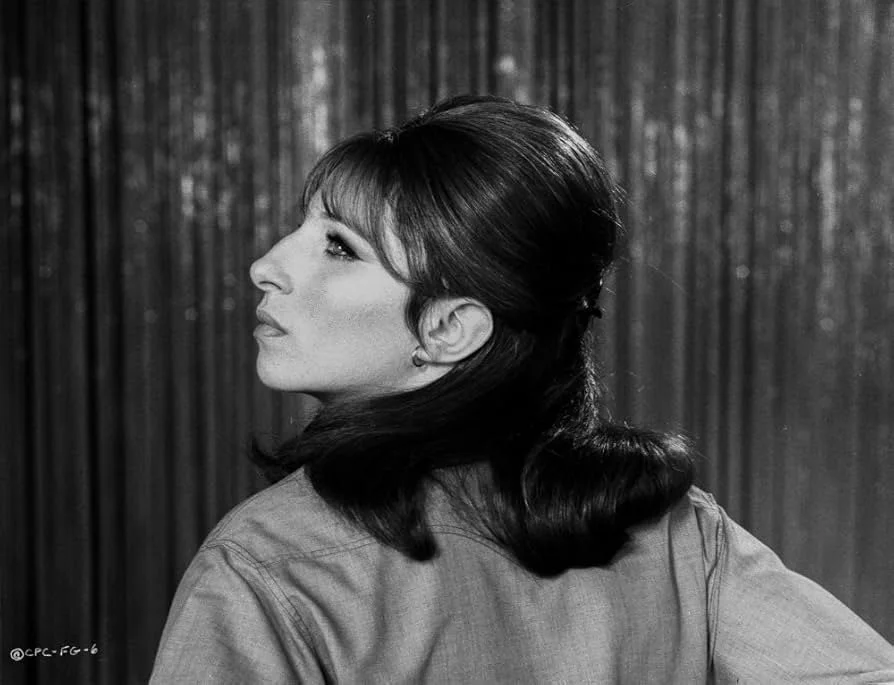
Barbara Streisand photographed in “Funny Girl” on January 1, 1968. (John Springer Collection/Corbis via Getty Images)
As Jewish representation in media has grown, so has our understanding of Jewish diversity. Who knows? Maybe in ten years, DeepAI’s algorithm will reflect that — generating a new face with every refresh.
At least for myself, after all my ambivalence about what my nose represented, I finally reclaimed my right to assign meaning to it. I proudly decorated my prominent nose with a gold hoop and decided I would never get a nose job. After all, my nose fits me better than the stereotype ever did.
Molly Seghi is a junior journalism student at the University of Florida and the editor-in-chief of “HaTanin Journal.” She always keeps a journal close at hand, filling it with ideas between long runs and kitchen experiments.